

Artificial Intelligence is hands-down one of the most discussed topics in boardrooms today. Every business leader recognises its potential, every organisation is experimenting with AI tools, and every team is trying to understand what this technology means for the future of work.
Yet, despite the excitement, one question continues to surface across industries:
How do we move beyond AI experimentation and start creating measurable business value?
According to McKinsey’s State of AI 2025 report, 88% of organisations now use AI in at least one business function. Yet only around one-third have managed to scale it across the enterprise.
The gap isn’t about technology anymore. It’s about leadership, priorities and knowing where AI can create real business value.
At Embitel Technologies, we have had countless conversations with our customers across industries. While many organisations have begun using generative AI for individual tasks, very few have a structured approach to integrating AI into business strategy, operations and decision-making.
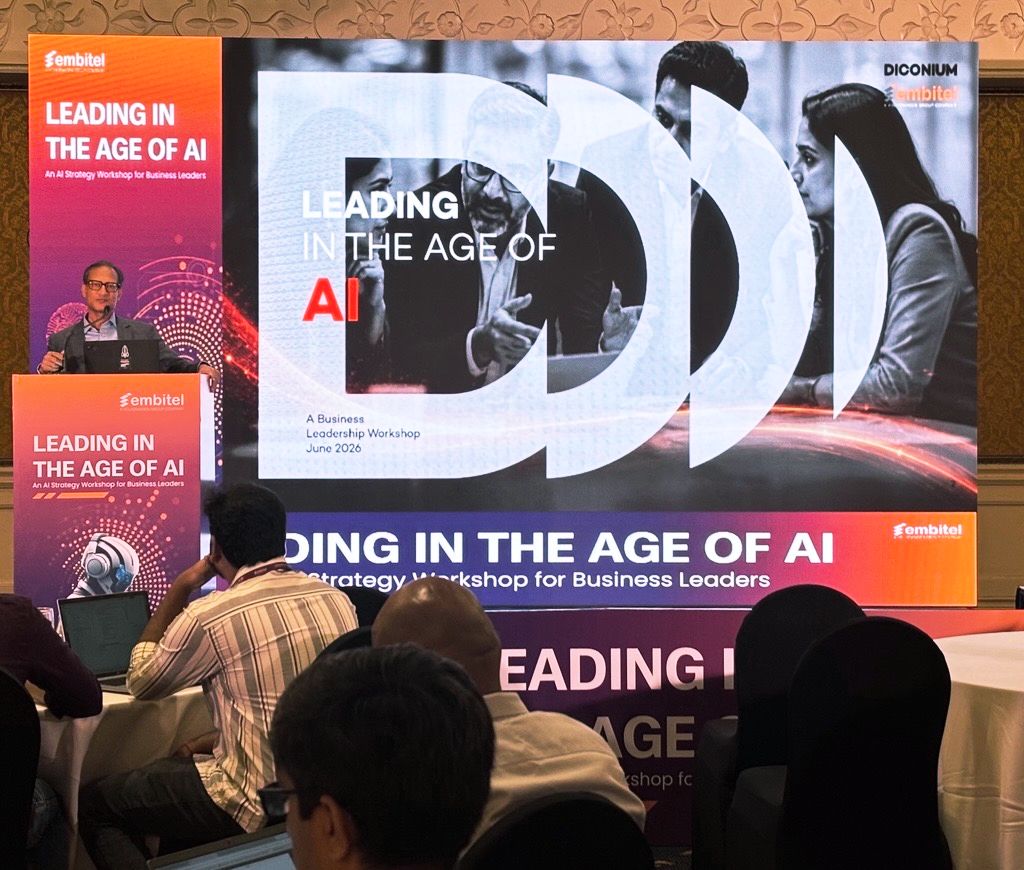
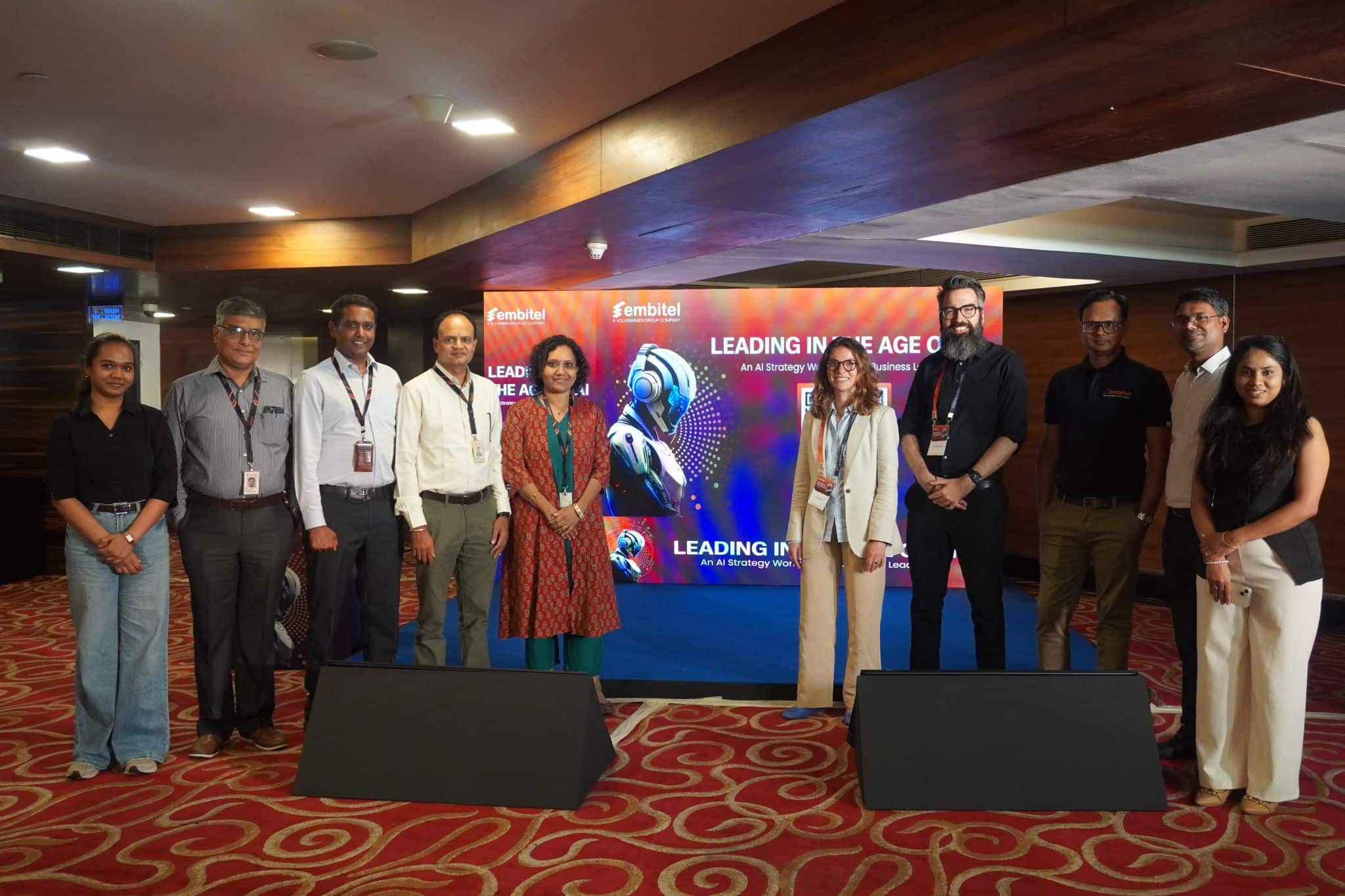
That observation inspired us to host “Leading in the Age of AI”, an executive workshop designed for business and technology leaders. Conducted in Bengaluru and Mumbai, the workshops brought together senior leaders across organisations to explore what it truly means to lead in the age of AI.
To make these sessions practical and globally relevant, we partnered with AI transformation consultants from Diconium, whose experience in helping enterprises build AI strategies added valuable perspectives throughout the day.
AI Isn’t the Challenge Anymore. Adoption Is.
Just a year ago, most discussions around AI centred on whether organisations should adopt it.
Times have changed and how? Today, most enterprises already use AI in some form. Teams generate content, summarise meetings, analyse data or write code using AI-powered assistants. Individual productivity is improving.
But isolated use cases don’t automatically translate into organisational transformation. Without a shared vision, governance, leadership alignment and clearly defined processes, AI often remains a collection of disconnected experiments rather than a business capability.
The real competitive advantage won’t come from having access to AI. It will come from knowing where it creates value, where it doesn’t, and having the discipline to tell the difference. That became the thread running through our sessions.
Why Context Matters More Than Prompts
From the outset, we made a conscious choice at the workshops. Rather than spending the morning talking about AI, we asked participants to start using it. It didn’t take long for the room to find its rhythm.
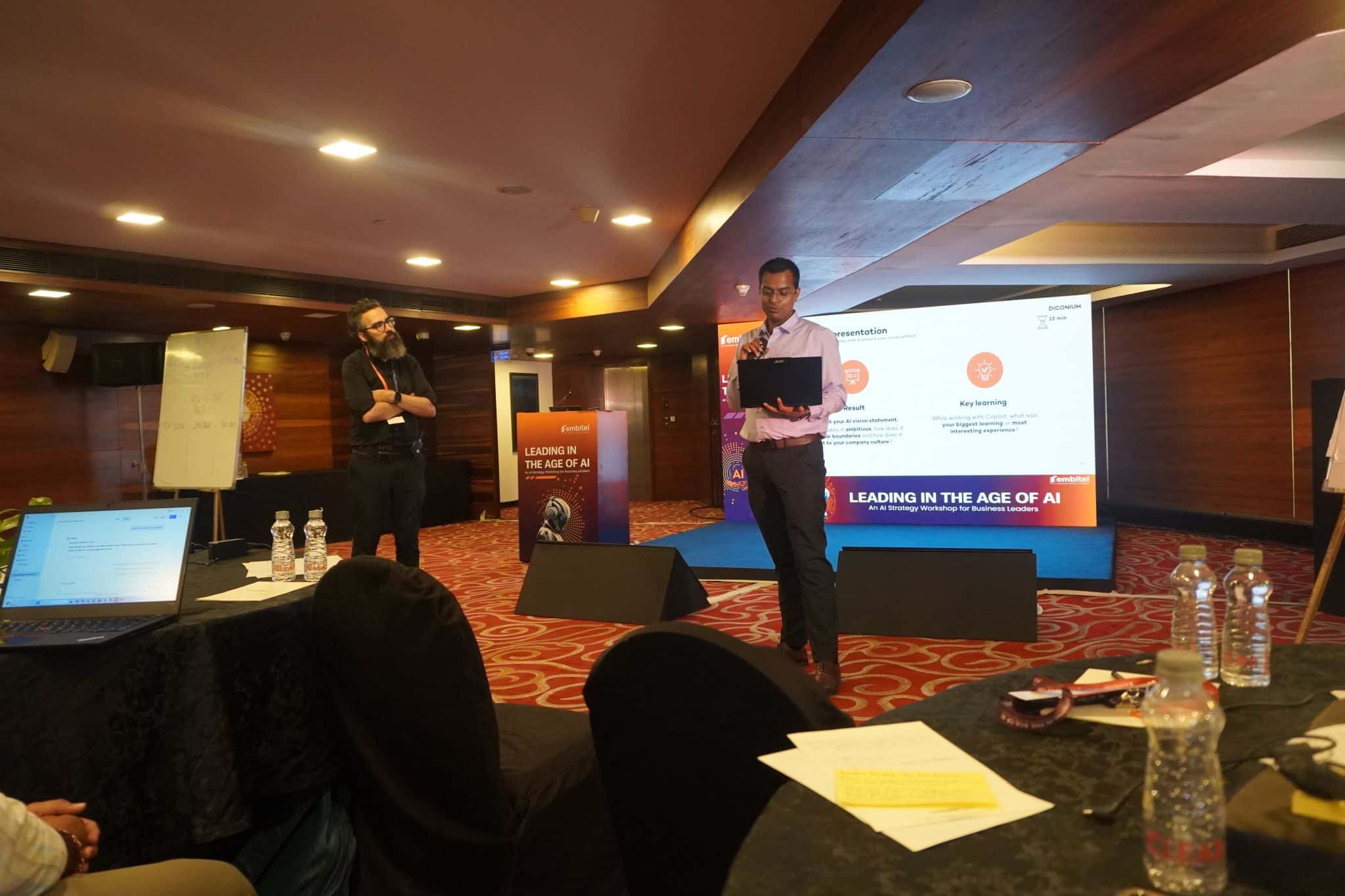
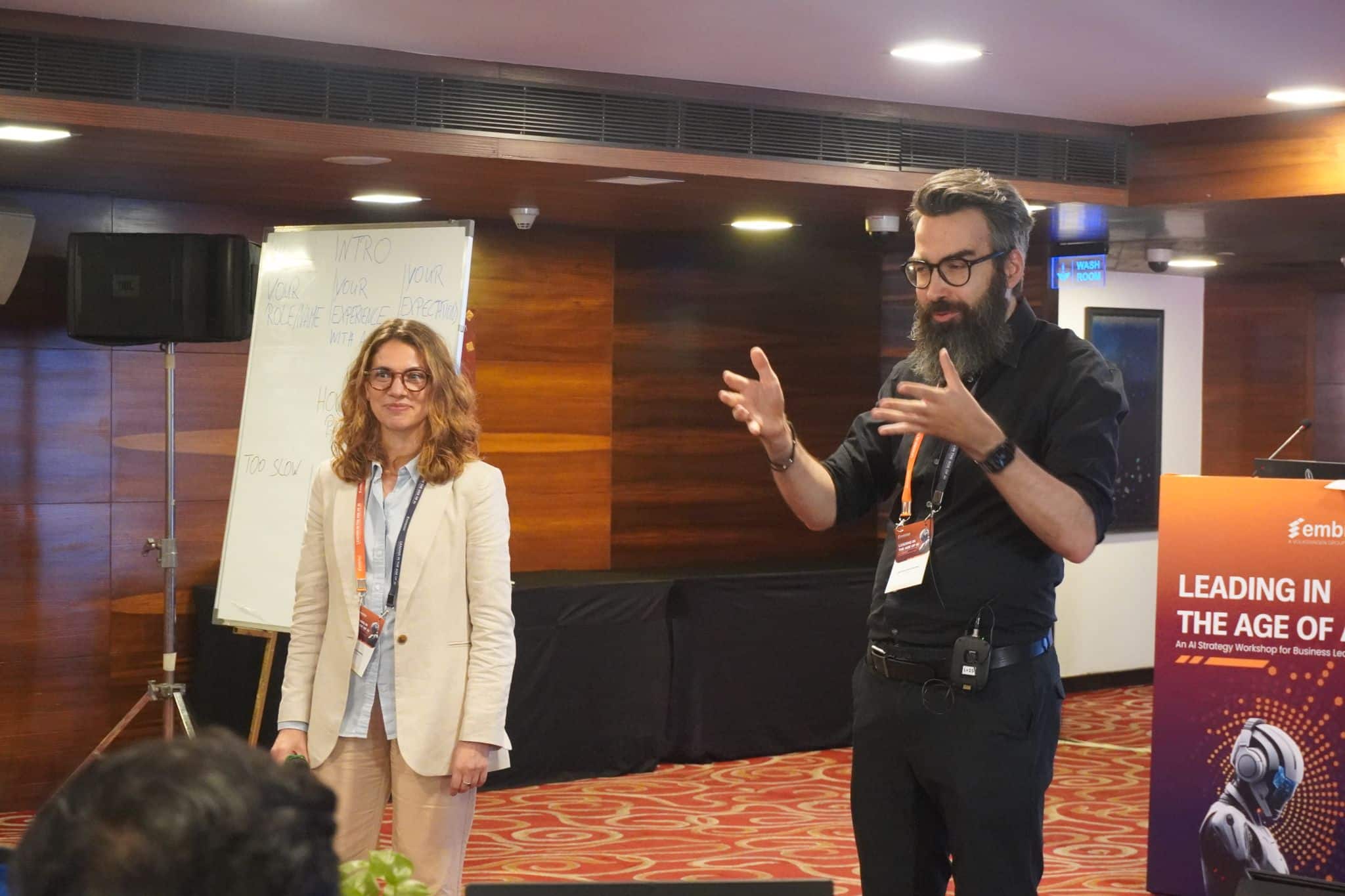
The presentations were brief. We wanted the workshop to feel less like a seminar and more like a working session. The real activity happened around the tables, where participants experimented with AI, challenged its responses and learnt from one another as much as they did from the facilitators.
It quickly became a two-way exchange. The facilitators shared frameworks and practical approaches, while participants brought their own business challenges, industry knowledge and perspectives into the discussion. The result was a room full of conversations rather than a room full of note-takers.
One insight surfaced repeatedly throughout the day. AI doesn’t reward clever prompts as much as it rewards clear thinking. The quality of the AI output improved dramatically when participants explained the business context, the objectives they were trying to achieve, the constraints they were working within, and the customers they were trying to serve.
Building Strategy Through the 4P Framework
A key highlight of the workshop was the 4P Framework shared by the consultant , which provided participants with a structured way to think about AI transformation.
Instead of treating AI as a standalone technology initiative, the framework encouraged leaders to examine four interconnected dimensions that are built around the 4Ps: Purpose, People, Process, and Product. Businesses should start by defining the purpose of adopting AI and the outcomes they want to achieve. They also need to prepare their people by building the right skills and encouraging an AI-ready culture. Reviewing existing processes helps identify where AI can support or automate work, while rethinking the product or service ensures AI delivers better customer experiences and creates new opportunities for growth.
One of the strongest messages throughout the sessions was that these four dimensions cannot be addressed independently. Real progress happens when strategy, people, governance and execution evolve together.
One Conversation that Stayed with Us
The workshop covered plenty of ground, but one experience stayed with us.
By the end of the workshop, participants had gone from learning AI fundamentals to building practical prototypes for real business use cases.
No one handed them a blueprint. No one claimed to have all the answers. What changed was that they had the opportunity to experiment, ask questions, test ideas and learn alongside others facing similar challenges.
That is often how confidence grows not through another report, webinar or keynote, but by sitting down, trying something, getting it wrong, trying again and gradually seeing what is possible.
Why Human Judgement Still Matters in the Age of AI?
One of the biggest takeaways from both workshops was that AI is not a substitute for strategic thinking. If anything, it makes good thinking even more important.
During the sessions, participants quickly realised that AI works best when it’s treated as a thinking partner, not a decision-maker.
As teams tested different prompts and compared outputs, they noticed that AI could sometimes sound convincing while missing important business context. The same question produced different answers depending on the model or the information provided. That sparked some of the most valuable discussions of the day.
Instead of accepting every response, participants questioned it. They challenged assumptions, refined their inputs and looked at problems from different angles. The quality of the conversation improved with every iteration.
That shifted the role of AI in the room. It stopped being a tool that simply generated answers and became a way to explore ideas, test assumptions and think through business challenges more deeply.
Human judgement remained at the centre throughout. AI helped speed up research, generate options and bring fresh perspectives, but it was the people in the room who decided what made sense for their business.
What Business Leaders Took Back from the Workshops?
The workshops didn’t end with a deck of slides or a list of AI tools to try.
Participants left with a clearer way of thinking about AI and, more importantly, how to apply it within their own organisations.
They gained a practical framework to connect AI initiatives with business goals, a better understanding of where governance and accountability fit, and first-hand experience of working with AI in a structured way. Many also discovered opportunities they hadn’t considered before, simply by collaborating with peers and looking at familiar business challenges through a different lens.
The workshops showed that getting started with AI isn’t about having all the answers. It’s about asking better questions, learning through practice, and taking practical steps that fit your organisation’s goals.
Embitel’s Perspective on Enterprise AI
Running these workshops reinforced something we’ve been seeing across customer conversations. Most organisations don’t need another introduction to AI. They need a practical way to connect it with their business.
At Embitel, we see AI as more than a technology investment. Its value comes from how well it fits into the way an organisation works. That means understanding where AI can improve decision-making, automate repetitive work, support employees or help teams move faster without compromising quality.
Getting there takes more than choosing the right model or platform. It requires business and technology teams to work together, leaders to set clear priorities, and the right governance to ensure AI is used responsibly. It also means testing ideas, learning from early outcomes and improving them over time.
That thinking shaped every discussion during our workshops in Bengaluru and Mumbai. Rather than focusing on what AI can do, we focused on how organisations can adopt it in a way that is practical, relevant and aligned with their business goals.
Looking Ahead
The workshops are over but the conversations around AI certainly are not. AI is evolving quickly, and every organisation will take a different path. There isn’t a single roadmap that works for everyone.
What matters is having a clear understanding of where AI can make a real difference, where people need to stay involved and how the business is prepared for that change.
For us, these workshops were just the beginning. We look forward to continuing these conversations, learning from our customers and helping organisations take the next steps in their AI journey, at a pace that works for them.
